
it’s been a month? seriously?!?
Okay. I’m tired of this shit. How it is that the only time i seem to find to sit down and write here is on a Sunday afternoon when i’m trying to bring my day to an end is just a categorical failure on my part. But if i sit back and think about it, there’s kind of a reason for it.
When i’m at work, people request things of me via phone, email, Teams, Outlook and our ticketing system. In addition to helping people resolve their issues and answer their questions, i have other administrative tasks that i have to complete- not least of which is creating tickets for all of the requests i get and then resolving them.
My day is unpredictable, stressful and by the time i get home, i’m utterly spent. This is a massive reason why i haven’t been to the gym since January and is probably a large reason why i haven’t even tried to find anyone to date in a very long time.
And then there’s Saturday. I’m stuck in a fugue state on Saturdays. Sure, i’m awake but only marginally functional. I can manage to get some chores done but i can’t be bothered to do anything that requires exertion or mental focus.
That leaves Sunday. Sunday is the only day where i have any energy – energy spent today mowing my back yard, lopping some branches and using my weed trimmer. It’s also the only day i like to go into Bellingham for food, fuel and anything else that i might need.
Then by the time i sit down to hammer out some thoughts here, or to paint (i’ll post my latest in a day or two), it’s a race against the clock before i have to get my sheets on my bed (there is just something so… sublime about sleeping on fresh, clean percale sheets), deal with my laundry and hopefully read a little before i have to go to sleep.
And that’s where i am now. I have about 10 minutes before i have to… oh fuck me, i forgot to put my sheets in the dryer. And i haven’t eaten since lunch.
The bachelor life just never ends.
i can’t hold this in anymore
For months… no, it has to be for years by now, i swear to myself and the one or two people that read this blog that i’m going to stop rushing these entries on Sunday afternoons. Yet – here i am. Again. Sunday afternoon? Check. Rushing to squeeze my thoughts out of my noodle like it were a tube of toothpase that has just a dollop left in it? Check.
There’s so much that has been happening and there’s no way around it- much of it is political.
And i can’t. I just can’t stay silent.
I just hammered out a couple of paragraphs regarding my thoughts on President Yamtits, his diminished capacity, his dementia and how he has no fucking plans whatsoever to either let us have a free and fair election nor does he plan on EVER leaving office.
But once that train gets moving, it won’t stop and as i said earlier, i don’t want synaesthetic.com to be a political blog. So i erased it and i’m going to just hammer this out instead:
Suffice to say, that we are now at war with Iran – and let’s just call it a “war” because we don’t look back at history and say, “It was just the Viet Nam military exercise, man!”
I have no love for the Iranian government. I’m old enough to remember their overrunning our embassy in Tehran (before they were the government) and capturing our ambassadorial staff and holding them prisoner for more than a year (Until Ronald Reagan paid for them to hold them long enough for him to get elected).
And i get it- the Shah was an evil sack of oppressive shit who was put in place by the United States because they were upset that the previously, fairly elected president had the audacity to share the wealth of Iran’s oil with the people of Iran. But the cruelty, the repression, imprisonment, torture, executions and terror of both the Shah’s government and the current Iranian government is a cancer on humanity that needs to be culled and cauterized.
And now, President Yamtits not only has declared war on them and assassinated their leader but now Iran is exerting their will on the Strait of Hormuz.
But beyond that; beyond the fact that in order to open the Strait, there’s a very fucking real option that the US is going to have to put a base of operations in Iran itself.
But even if that doesn’t happen, let’s be real fucking clear eyed about what the United States has done.
They declared war on a nation that has cultivated, supported and refined terrorist tactics for DECADES. Let’s put aside their drones and how the US is flinging million dollar Tomahawk missiles to take out a $20,000 drone and just focus on what i just said – Iran has DECADES of operational, logistical and financial experience on cultivating, training and supporting terrorist cells.
And this asymmetrical warfare will come to our shores. It will show up in our crowds, our holidays, our tourist locations, our airplanes, our ships and maybe even our schools if for no reason other than to “settle the score” of our murdering 155 or so girls.
Add to that, we executed their leader. And you know what that means? We’re telling not just Iran, but the rest of the world, “You now have permission to murder any leader of any country that upsets you.”
A lot of Americans have this idea that Iranians are low educated, camel riding hicks of the middle east. And not only is that profoundly and exceptionally stupid, it’s just outright dangerous. Iranians are highly educated, highly intelligent and very resourceful people. Their country existed thousands of years ago and it will exist thousands of years after today. The terrain is largely mountainous, forested and the country itself is huge. But you know what else they are?
Patient.
And make no mistake about it: even if the current government is overthrown, there are millions of Iranians who will dedicate the rest of their lives to making us and our allies bleed…
For decades if not for centuries.
And every one of you fucks that either voted for this senile, sack of greasy orange shit because he was going to hurt the people you want to hurt, and to all of you lazy fucks who couldn’t bring yourself to vote for the woman with “the funny name,” let me be really clear about this last point:
ALL OF THIS IS ON YOU. This is blood on your hands. This is a shame that we will always hold against you. Even if you don’t or aren’t capable of feeling shame, the rest of us with a moral compass and a sense of decency, we will ALWAYS be ashamed of you.
Each of you are how we went from Dwight Eisenhower to this child raping, clinically insane, diminished capacity coward and as long as you cling to him and your fetish of hurting people different than you are, be it because they have dark skin and/or a vagina or just so happen to be attracted to and/or love someone that upsets you, let’s be really clear on my last point:
You will never be forgiven.
the long dark has begun
Around mid to late November, we head into what we call The Long Dark. It’s a bit of a dramatic name because as anyone that lives in Edmonton, Yellowknife, Anchorage, Fairbanks, Oslo, Helsinki, Longyearben (Home of Arctic Outpost Radio), etc… will tell you, we have it really easy when it comes to short days and long nights.
But for us, the sun is now setting a little after 16.00 and with another 3 weeks until the solstice (and the beginning of winter), the sun is going to continue to set earlier and earlier.
And while there’s always a contingent of people who bitch and moan about being “off daylights savings time” and how horrible it is that it gets dark so early, the truth is this is the time of year that getting rest is easier than any other time of the year.
As for those whiners, fucking move to Alabama or just leave the country and go to Ecuador, assuming they’ll have you (they won’t). You live in the Pacific Northwest. It rains. It gets dark early in the winter. It gets cold. If you don’t like it, fucking move. I mean, i lived in Texas for 36 years. I got tired of the heat (and rednecks/ fundies/ southern baptists/ bigots/ etc…) so you know what i did? I MOVED! Would you move to Glasgow and whine about how dark it gets there?
Yeah, those people absolutely would.
Anyhow – the point i came to make tonight is that i have every intention of building on what i wrote about in my previous entry. In particular, i have every intention of piecing together a photo album of my trip to Nevada. But right now, i’ve slept 9 hours for the last three nights straight. Today was the first day at work that i was able to work and not feel like i was going to fall asleep.
I’m not sure that i’m going to sleep 9 hours tonight but i’m also not sure i won’t. What i do know is that while i’m not sleepy, i lack the focus to make good on my promise to get that photo album going. Add to that my new (well new to me) phone arrived and i’m trying to get my apps and documents moved over. I have a pretty spicy phone rant that i need to unleash. Suffice to say, fuck Apple for taking features away (like ethernet ports, 3.5mm ports, etc…) and then charging more as though they were some sort of trend setting edgelord. When i buy a phone, i expect a 3.5mm jack and an SD Micro slot for my SD Micro card where i keep my music.
I need to just end that right there because i am on the precipice of a rant.
And i need to get back to babysitting this phone.
So there.
footprints in the desert
About three weeks ago, i had the privilege of spending some time in southern Nevada with a friend. There are people who are fans of Fallout and then there’s FANS, like my friend Daniel whom i’ve known since we were roommates in college and then again when we both moved to Austin.
He’s seen far more of me than any one person ever should but he has, for reasons that defy logic, always been a friend to me. I… i used to be a very different person and that person wasn’t always worth being a friend to.
But having gone to one with him the previous year, his wife suggested he invite me and Shelly to go with him to the Fallout Fan Celebration in Goodsprings, NV this year. Shelly declined which left me.
And let me start this by saying something i’ve often said in this journal – i really, really, REALLY need to stop writing in it as a last minute thought as my Sunday comes to an end. To that point, let this entry be just a quick introduction to what will eventually become a much more thoughtful and much longer entry.
I was in a bit of a daze for a few days after returning from the desert. The reason being that when confronted with an experience larger than what one is ready to receive, it takes time to process that experience. For the sake of brevity, i’ll just focus on the part that probably had the most profound experience on me – the desert.
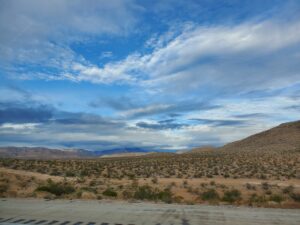
The part of Texas i’m from is canopied in rolling hills of limestone and carpeted in cedar trees and oaks. The scrublands of the El Paso region are more traditional desert but other than taking a day trip to Alamagordo for the White Sands National Park, i never spent much time in the area surrounding El Paso.
As we drove to and from Las Vegas to Primm (where we took busses to Goodsprings), we were surrounded by seemingly endless stretches of desert. It was breathtakingly beautiful and serene. It also wasn’t summer, which makes appreciating the desert a much easier thing to do than when it IS summer.
Ummm… i’m more short on time than i intended. I’ll come back to this post soon – hopefully during the evenings over the coming days. And when time permits, i’m going to make a Google Album of pix from both myself and Daniel.
In the meantime, here are a couple of images that will be in that album.

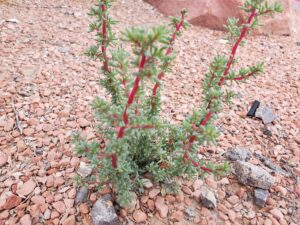
Okay – i have laundry to battle, food to eat and i should probably have a discussion with my razor soon.
More to come.
p.s. it turns out that clicking on the photos doesn’t direct you to a larger size of the image. I’ll see about fixing that.
why i didn’t finish the last post
In my previous post, i was just about to disclose something an old friend (Heather, now known as Auburn) said to me. It pertained to some previous behaviors of mine and given the time since those behaviors, i really shouldn’t be reserved about bringing it up.
But the more i thought of it, the more uncomfortable the thought of bringing it up became.
But here’s what I will say- during the 28 or so years that my obstructive sleep apnea consumed me, living became an exercise in subsistence… of survival. I lived nearly 3 decades getting two and a half hours of recuperative sleep a night – and very likely far less some of those nights. I remember one time when i’d moved to Portland, i was working a night shift. It was probably the absolute worst thing i could have done to myself at the time as to this day i’m still unable to get recuperative sleep when the sun is out.
I remember going to work and getting a passdown from the previous shift operator. I knew every word that was coming from his mouth but i was unable to understand any of it. My customer service skills were great but i was a terrible match for that job and not getting recuperative sleep was why i was eventually fired.
But the problem began many, many years before that. If i had to guess when it really began to manifest, i’d say it was my junior year of college; maybe even my sophomore year.
Working at Motorola in a wafer fab as i did for more than five years was particularly grueling. I was tasked with doing visual inspections of wafers which meant prolonged periods of sitting and staring in a microscope. And nearly every day was a brutal struggle to maintain consciousness… especially after lunch.
I’d get back to my station, sit down and immediately start dozing off. I’d briefly lose consciousness and bang my eyes on the microscopes optics. People laughed at me. My supervisors hated me – which on that note, at least there was symmetry.
In stop and go traffic, especially the likes of which i used to deal with on the lower deck of I-35 in Austin, i would constantly be nodding off in the stop and go traffic. How i managed to never rear end anyone or cause an accident is a mystery for the ages.
What i’m getting to in my usual roundabout way is that every day… every goddamned day was an existential struggle to stay awake. And it had another effect – the only things that were accessible to me were: eat, sleep, work and fuck. It left me incapable of accessing anything beyond those and the only way i got through work was just sheer, mindless and brutal determination.
It also left me, and to my eternal shame, unable to recognize, let alone take accountability for my own shit. Eventually that bill came due in many forms – jobs lost, job opportunities lost and worst of all, it alienated the love of my life from me and she would eventually leave me. I can’t take full responsibility for that, i have to take responsibility for the part that was mine.
And i suppose i’m still paying for it to this day. I never became what i could have been but more than that is the ever lingering question that as i’m staring down the barrel of 60 years old and having never been married and not even having a date since 2017, and this growing disconnect i live with, which was discussed in a previous entry. I have to wonder- is there just something fundamentally wrong with me? I suppose that’s a discussion best suited for a professional counselor but i will say that i feel like i’m in a good place, emotionally speaking but dating in north Whatcom County is kind of difficult; made more so with fucking President Yamtits pissing off all of Canada (except maybe Alberta- aka The Province of North Texas).
I can’t remember how much i’ve written about the 28 or so years that my obstructive sleep apnea took from me. I know i’ve written about it but i can’t recall if i’ve written about it in this way. It’s not just the things that i missed and the things that i couldn’t see. It’s the lack of emotional filters that left me, again to my eternal shame, impulsive and obsessed with the most banal of things.
an echo from another life
I have a friend named Auburn. Well, she’s now known as Auburn in the short time i dated her in the early 90s, she went by her given name: Heather.
Auburn has been through a lot. I don’t think she’d mind my sharing this and i’ll check with her later but she was emotionally neglected by her mother, physically (but not sexually) abused by her dad, which by its nature is also emotional abuse and then she was also sexually abused by a friend of the family starting when she was 9 years old.
I was incredibly inexperienced when she and i went out. I’d dated two women before her- my first girlfriend who was a bit of a… well, lots of drama was involved at various times. And then the second woman i dated and that lasted for a month.
This is to say that i had some pretty unreasonable thoughts and expectations on what women were… rather, what they were “supposed” to be. And this is one of the two reasons why Heather and i didn’t date for long. And that’s on me. I was stupid, inexperienced, immature and… well, i was an ass.
The other reason is that the same week she met me, she met a guy who she would eventually spend 10 years with. Some of those years they were married until they weren’t.
Before i go into what this post is about, i want to rewind so the beginning of this post and explain a couple of remarkable things about Heather that stuck out to me and has become two of the most important memories i have of her.
It’s the early 90s. I think at the time i had my 486/ 33MHz. This is a couple or more years before Netscape. I had a 14″ VGA monitor, 4 MB of RAM and a dial up modem. One of the local BBS’ i was on was called Austin Matchmaker. And you have to remember that back then, there were no selfies posted. Everything was text or ASCII. If you were on Usenet and wanted to download an image, you had to find all of the parts of it, CAT (concatonate) them together and then open them in an image viewer. But the only mobile phones back then were the size of a brick, an antenna that you could stab someone with and were relegated to those with more money than common sense.
I had this habit back then of giving asinine answers to the questions on my profile there. I’ve always had a strong sense and a deep appreciation of the absurd and i filled my questionnaire with asinine, silly and absurd answers as was my wont.
And probably still is.
One evening, a message comes to me from Heather. It read, “Cut the shit. I want to get to know you.”
To this day… and i’m typing this now as a mid 59 year old… to this day, Heather was and IS the only person to dismiss my armor of absurdities and let me know she was curious about me.
Gold star earned, Heather. Boop!
The second thing that i remember about her from then happened one evening when i was at her house in S. Austin (off of Brodie Lane, for anyone that cares). She was on a phone call that i could tell was emotional. I remember that when she came back into the living room to be with me, she was rattled but also relieved.
She had taken the time to track down her abuser from her childhood and call him.
It was a singular act of courage that kind of became my defining memory of her. You have to remember, this is DECADES before the MeToo movement. Also, tracking someone down wasn’t always easy.
Heather and her long term boyfriend, Matthew, would live together and eventually get married. There came a time when the woman i lived with and dearly loved would share a duplex with her and Matthew. And so we’d see each other on a near daily basis until i moved to San Francisco to be with my girlfriend at the time.
The day i packed the last of our items on the truck would be the last day i ever saw her.
In the years after we went our separate ways, lots of things happened. Heather and Matthew eventually divorced over irreconcilable differences. Heather went to Burning Man one time and it was either there or shortly thereafter that she decided Heather was in her rear view mirror and Auburn was born. It was also, to the best of my understanding that around this time, Auburn decided she wanted to be a sex worker.
And so she did.
It was during this time we didn’t communicate much. She had her life and then in late 1998, my world violently unraveled when i lived in San Francisco.
Eventually i learned that she worked in Nevada a bit and i know she had a stint at The Bunny Ranch (i think that’s what it’s called) and then i know she did some solo work and specialized in what i’d eventually learn is called GFE – a Girlfriend Experience.
But our communications were spotty by then. I’d hear from her once every couple or three years and was never quite clear on what was going on with her. Eventually i’d be with the woman i dated between 2008 and 2012 and for reasons that i won’t go into right now, her name was brought up with some degree of frequency.
And that kind of kicked off our communicating more often which meant that gaps of years became a gap of a year or a few months. And then, of course, my relation with that particular woman came to its insane and stupid end. I’ve commented on this a few times over the years so if you want to know more, you can read my previous posts.
As an aside, i don’t think i ever got around to linking that absolutely insane email she sent me. I should do that some evening.
And long story made short, a couple or three years ago i wrote a long handwritten letter to her. I brought up the two things i remember the most about her from when i met her (there were others but those were the two non-sexual things that i always cherished). I also took some accountability and apologized for my lack of maturity back then, which included my lack of appreciation for who she was and that i’ve often wondered what would have happened between us HAD i been more mature and had i been more experienced then than i was.
Fast forward to the last few months. We spoke on the phone for the first time in two decades in late spring/ early summer and we’ve been speaking and sending texts back and forth with some degree of frequency.
Last Saturday night, she called as i was getting ready to go to sleep and we had an extended conversation.
And it was something she said then that is what i was going to write about tonight. Unfortunately as is usually the case, i don’t get to sit down and write until my day is almost over. That means that i have to end this here and try to come back to it tomorrow or tomorrow’ish.
shelly
i really meant to update the previous entry
Last Sunday when i said i was going to come back and finish that journal entry the next day, i really meant that i was going to come home from work and FINISH THAT JOURNAL ENTRY THE NEXT DAY.
I’m in a trap. And i’ve been in this trap for a long time. I don’t remember what i wrote last week and i’m too lazy to look at it but i think i outlined the general problem- weekdays are comprised of waking up at 04.30, starting my shift at 06.00, getting home around 15.00 and almost always in an absolutely depleted state. Just emotionally and physically drained. I might do some housework but it probably won’t be much and some evenings i don’t do any at all. Some nights i put together something to eat, provided it doesn’t take much prep time.
This goes on Monday through Friday.
Saturdays are a mess. You’d think they would be fantastic days because i don’t have to go to work but there’s something i haven’t explained.
I am no longer able to sleep through the night most nights. I will wake up anywhere between midnight and 2am; give or take an hour. I will not be able to fully wake up but i’m also not able to go back into REM. I do not obsess or fixate on anything in particular and exercises like reading, breathing exercises, counting, etc… do nothing for me.
It takes me about 2, sometimes 3 hours to fall asleep again.
Then always, always, always, i wake up around 04.30. My alarm is set for 05.00 but i’ve only slept that late on a weekday maybe twice in the last 5 to 7 years. I just KNOW when it’s time to get up.
Here’s what happens to me on Saturdays. EVEN IF i get a full night of sleep, i am stuck in this perpetual fugue state. I just cannot get out of it. I’m unable to be fully in the moment, i’m barely able to concentrate, my motivation is absolute shit and while i MAY get some things around the house done, they tend to be relatively minor, although i do mow one of the lawns if it needs it.
Then Sunday comes along. This is the only day of the week where i feel fully present, mentally alert and motivated to do anything. And that “anything” is always, always, ALWAYS running for groceries in the morning, then housework, yardwork and laundry.
And this has become a cycle of… i don’t want to call it self loathing because it’s not but it’s certainly self directed anger and frustration because i want to paint, i want to write and i have guitars, a bass and a keyboard and i never do anything to learn them because from start to finish on a Sunday, i have shit to do. And because i’m an Eternal Bachelor™, there’s no one to help me. Anything that i want to do, i have to do. Anything that i need to do, i have to do. I don’t have anyone in my life to help me and i don’t make enough money to hire anyone to help me.
By the time that 4 or 5p rolls around, it’s time for me to shower, get my laundry sorted and wind down.
This has been my life for years now. And i don’t know if it’s because of this or i’m like this for other reasons, but it’s getting harder and harder for me to connect with people.
I don’t know if i’ve talked about this before and just as i was a few minutes ago, i’m still too lazy to look at my previous entries. But it’s the singular issue that makes me think of this journal and what i would say about it.
I have to explain something so that statement makes sense. Very few people read this if any. I’m kind of a cul-de-sac on the internet. A tired, old house that has zero curb appeal and is about as inviting and enticing as a manual on dental tools from the 70s. And because my finances are so tight (adjusted for inflation, i make SIGNIFICANTLY less than i did 5 years ago, which probably deserves an entry of its own), i can’t afford a counselor. And while i’m certainly not against a counselor or psychologist, i’m also not sure what i could tell them because whatever it is that’s causing my growing separation from people isn’t specifically identifiable. It is a shadow that hides in my peripheral vision and doesn’t let me look directly at it nor does it offer any hints as to how it came to be nor how to dismiss it.
But it’s also more than just that. It’s the culmination of decades of things that have made life more difficult than it probably should be- or maybe not. Maybe things are just supposed to be difficult and maybe i’m actually okay but it sure would be nice to be able to speak to a professional that could assess me objectively.
And i suppose this would be yet another case of my general rambling into the void but something happened a few days ago that caused me to reflect on the distance i’ve traveled since 2012.
I have some unused gmail accounts that have fallen into neglect. One used to be my primary account. After the breakup and some particularly bitter emails from my ex, i abandoned it. Ugh… let me come back to this account and some things i came across another time.
But there was another account that i created before the breakup that i used for a Fetlife account that i don’t think i’ve logged into for 8 or more years. As a side note, if anyone feels the need to try to shame me for having a Fetlife account at any point, be aware that i am absolutely, 100% impervious to being shamed when it comes to matters of sexuality. That sort of shit is for insecure, broken little whining shits and they can fuck off.
ANYWAY – as i was saying… i used that account to correspond with some women. There might have been one or two that were women that i corresponded with because of Fetlife but the others were women that i’d met through other means.
It was a reminder of just how dark and broken i was back then. To be honest, i don’t really need much of a reminder for that. What i don’t like is having to acknowledge just how fucking desperate and stupid i was then. I used so many coping strategies to maintain a relation with someone that my friends and i now see as well disguised white trash who got pulled into a pseudo intellectual cult riddled with the human wreckage of broken people incapable of knowing how to distinguish getting fucked from being loved.
I don’t know. Polyamory isn’t a cult, per se. Unfortunately it’s rife with people with cult adjacent behaviors, beliefs and who mistake both for critical thinking.
That’s an albatross of shame that is difficult for me to fully forget. I’m not too ashamed of it mind you. I understand why i went down the path of polyamory, which, not to put too fine a point on it, is probably worth it’s own journal entry if i haven’t done so already.
The thing that caught me; the thing that i probably could have just said outright several paragraphs ago now is that reading those old emails from the person i used to be – there was a certain brightness to him. There was hope, desire and certain flourish in the way he wrote. And while i have no desire to be that person again, i have very little, if any hope in my life now. The years of solitude and loneliness have carved and hollowed me into someone that wakes up, goes to work, is too exhausted to do anything fulfilling when he gets home, is too discombobulated and too busy on the weekends and never makes time to do the things that matter: paint, write and learn music theory.
So there you have it. This is my casting my message in a bottle into the endless seas under a sheltering sky. If you’ve read this, know that just by virtue of getting this far, you’ve been my silent therapist.
wow. has it really been this long?
I do think of this site more often than my posts suggest. My life is largely sleep (and barely at that), work, then i usually come home absolutely exhausted and unable to think of, let alone do anything creative. When Saturday comes around, i’m usually emotionally depleted from work the previous week and i tend to just stay in this fugue state all day, then somehow manage to usually stay up too late.
Sundays are the only day in the week (usually) where i’m rested. And it’s filled with chores and errands and sometimes cooking large batches of food for the upcoming week.
All of this is about as exciting for you to read as reading a catalog of wallpapers but if i were to be honest about it, there is a larger point to be made.
Unfortunately it’s getting to the point in my day where i need to transfer to my bedroom and start getting ready for bed.
One thing i’ll say before i go is that when i leave for work, it is now pitch black outside. We are in this odd period of the year where it’s not hot enough to be summer nor cool enough to be autumn. Still, this afternoon, an awning of grey stretched across the horizons and it rained for a while. It was relaxing in a way that i haven’t felt since spring.
Oh, before i go- i’ve been trying to paint more lately. It has not been going well. I may talk more about this as this post develops.
mostly sane ramblings from a Sunday afternoon
Welcome to my late Sunday afternoon ramblings of a mostly sane man with allergies, stopped up sinus’ and no script. Lots of pauses as the voices in my head tell me what to say next and the microphone is a cheap, headset mic. I’ll work on my production values in the weeks and months to come but i wanted to just hammer out something tonight.
Note: i didn’t edit out the pause at the start that’s used for noise reduction. I’ll go back and edit it out eventually. Come to think of it, i’m probably going to edit out a lot of the pauses because listening to me speak sometimes is like waiting for a cold engine to finally catch.
Also, i forgot that i was streaming SomaFM in the living room – so if you pick up some music in the background, that would be the ever popular Groove Salad helping out.